
General information about radiotherapy and how a review with a radiation oncologist at a partner clinic is coordinated, from your records to planning scans.
Important
This is general information, not medical advice. Cancer care decisions must be made with your treating oncologist. In an emergency, contact your local emergency services.
ELAVIA Global coordinates care; it does not provide medical treatment. All cancer care is delivered by independent partner clinics and their licensed oncologists.
A second opinion is an additional view, not a replacement for your current care. Please do not stop, delay or change any treatment without speaking to your treating team.
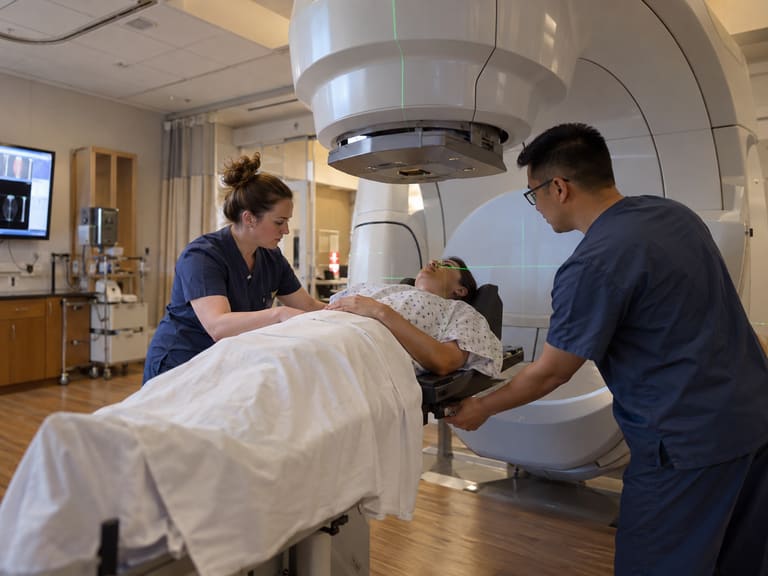
Radiotherapy treats cancer with precisely aimed, high-energy radiation. It can be given by itself, before or after surgery, or together with chemotherapy. Most often it comes from a machine called a linear accelerator (external beam radiotherapy), with techniques such as IMRT, VMAT and stereotactic radiotherapy shaping the dose around the target. For some cancers, radiation is placed inside the body instead (brachytherapy).
A radiation oncologist plans the treatment with medical physicists, using a special planning CT scan and sometimes MRI or PET-CT. The number of sessions ranges widely, from one treatment to several weeks of weekday visits, depending on the cancer, where it is and what the treatment aims to do.
The radiation oncologist decides whether radiotherapy is right and which technique to use after reviewing your scans and pathology. Having advanced equipment available does not by itself make a treatment suitable.
You get in touch with a coordinator and explain what you would like looked at. We are clear about our role: ELAVIA Global coordinates care and does not give medical advice or treatment.
With your permission, your reports, scans and pathology go securely to an oncologist at an independent partner clinic. The original scan files or pathology slides may need a fresh look, or some tests may need repeating.
The radiation oncologist reviews your scans and pathology and explains whether radiotherapy is advised and, if it is, the broad approach. A planning scan in person is needed before any treatment can be designed.
If treatment goes ahead at a partner clinic, its radiotherapy team gives the sessions according to the approved plan. A course lasting several weeks means a longer stay, and the coordinator helps you organise it.
You take written reports home with you. Follow-up normally continues with your own oncologist, and the coordinator helps pass records between the teams.
These are only general examples. A treating oncologist decides whether any test or treatment is right for you, after an examination and a review of your scans and pathology.
Keep the originals and send copies. The team carrying out the review may request more records or ask for some tests to be done again.
Anything from a single session to several weeks of weekday treatment. The radiation oncologist sets the timetable to suit your diagnosis and plan.
No, external beam radiotherapy does not make you radioactive. Some kinds of internal radiotherapy need short-term precautions, which the team explains if they apply to you.
A course is normally given by one team, following one plan, on the same type of machine, so splitting it is not usually recommended. Raise any travel needs with the radiation oncologist before treatment begins.
It depends on the area treated and the dose. Tiredness and skin changes over the treated area are common, and the team explains the particular risks of your plan, including effects that might appear later.
Cancer care is planned and priced individually after the oncologist reviews your records.
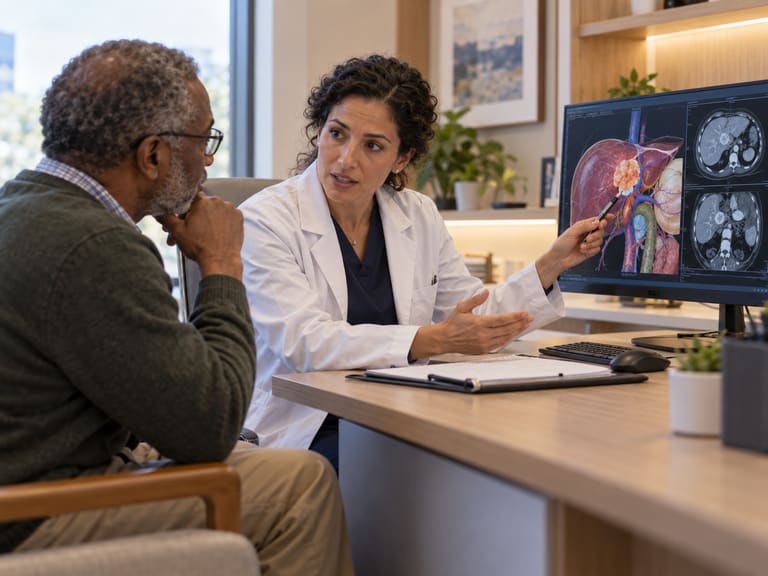
General information about cancer surgery and how a review with a surgical oncologist at a partner clinic is coordinated, always as part of a multidisciplinary plan.
View treatment
General information on how breast cancer is assessed and treated, and how a review with a breast cancer team at a partner clinic is coordinated.
View treatment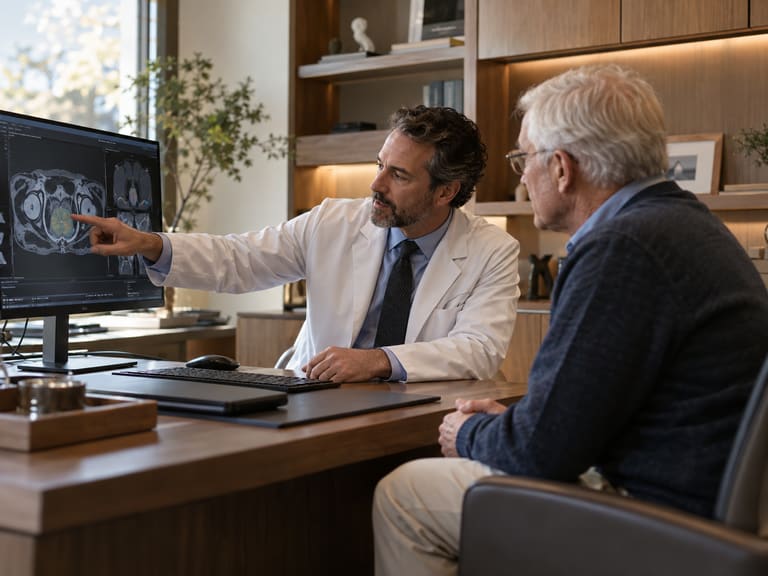
General information on prostate cancer assessment and treatment options, and how a review with a urology and oncology team at a partner clinic is coordinated.
View treatmentSend your records and your questions, and a coordinator will explain how a partner oncologist could review them. You are under no obligation, and your current care carries on as planned.
This is general information, not medical advice. Cancer care decisions must be made with your treating oncologist. In an emergency, contact your local emergency services. ELAVIA Global coordinates care; it does not provide medical treatment. All cancer care is delivered by independent partner clinics and their licensed oncologists.
ELAVIA Global coordinates international patient care. Clinical services are delivered by independently operated facilities.