
General information on PET-CT, biopsy and staging tests, and how diagnostic appointments at a partner clinic are coordinated, with results shared with your treating doctors.
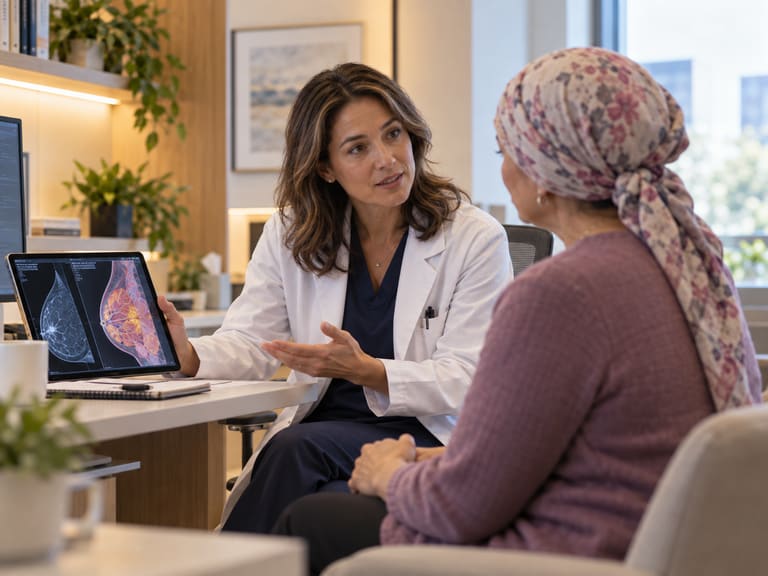
Important
This is general information, not medical advice. Cancer care decisions must be made with your treating oncologist. In an emergency, contact your local emergency services.
ELAVIA Global coordinates care; it does not provide medical treatment. All cancer care is delivered by independent partner clinics and their licensed oncologists.
A second opinion is an additional view, not a replacement for your current care. Please do not stop, delay or change any treatment without speaking to your treating team.
Cancer diagnostics are the tests that show whether cancer is there, what kind it is and how far it has spread. They cover scans such as CT, MRI and PET-CT; biopsy, in which a small piece of tissue is taken; and pathology, in which a specialist doctor studies that tissue under a microscope, often alongside molecular tests.
Staging pulls these results together to describe how big the tumour is and whether it has reached lymph nodes or other organs. The stage and the pathology together form the basis of the treatment plan.
A doctor orders tests to answer a particular clinical question. Neither a PET-CT nor a biopsy is a general screening test, and the results have to be read by a specialist in the light of your history. They are shared with you and, if you agree, with your treating doctors.
You get in touch with a coordinator and explain what you would like looked at. We are clear about our role: ELAVIA Global coordinates care and does not give medical advice or treatment.
With your permission, your reports, scans and pathology go securely to an oncologist at an independent partner clinic. The original scan files or pathology slides may need a fresh look, or some tests may need repeating.
A specialist at the partner clinic looks at the request and your records and confirms which tests make sense. Some need preparation, such as fasting or pausing certain medicines, which the clinic explains.
Scans and procedures take place at the partner clinic. Radiologists and pathologists write the reports, and some results, detailed molecular tests for instance, take longer.
You take written reports home with you. Follow-up normally continues with your own oncologist, and the coordinator helps pass records between the teams.
These are only general examples. A treating oncologist decides whether any test or treatment is right for you, after an examination and a review of your scans and pathology.
Keep the originals and send copies. The team carrying out the review may request more records or ask for some tests to be done again.
PET-CT is not a routine screening test. A doctor orders it to answer a specific question, and it involves radiation. A specialist confirms it is appropriate before anything is booked.
Scan reports are often ready in a few days. Biopsy and pathology results generally take longer, and some molecular tests a few weeks. The clinic gives you an estimate for each test.
A doctor should explain them, both at the partner clinic and in your own treating team. The coordinator can arrange a consultation to go through the reports but does not interpret them.
Usually, yes, such as fasting for several hours and keeping blood sugar in check if you have diabetes. The clinic gives you exact instructions, and they should be followed to the letter.
Cancer care is planned and priced individually after the oncologist reviews your records.
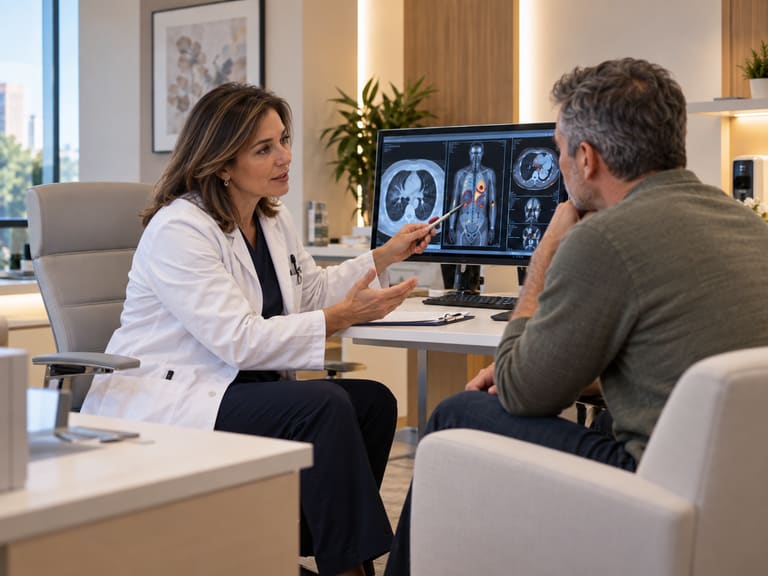
An additional expert review of an existing cancer diagnosis or treatment plan by an oncologist at a partner clinic — alongside, not instead of, your current care.
View treatment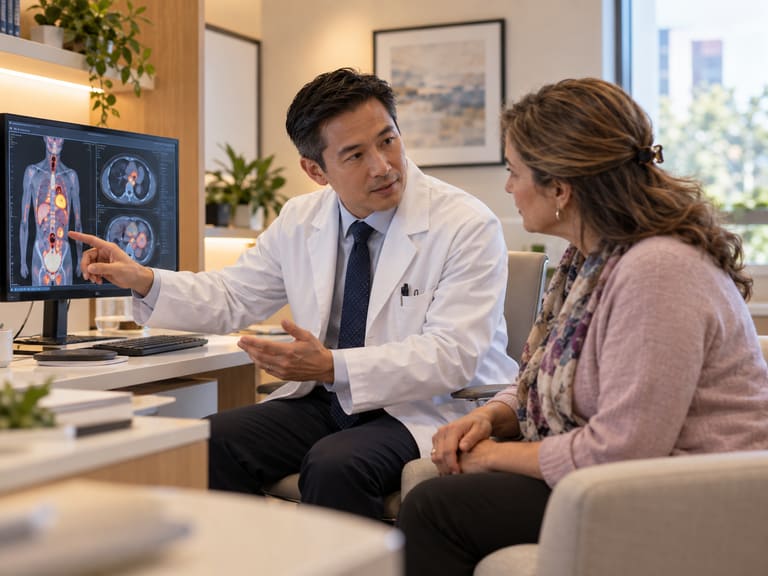
General information about chemotherapy, immunotherapy and targeted therapy, and how a review with a medical oncologist at a partner clinic is coordinated.
View treatment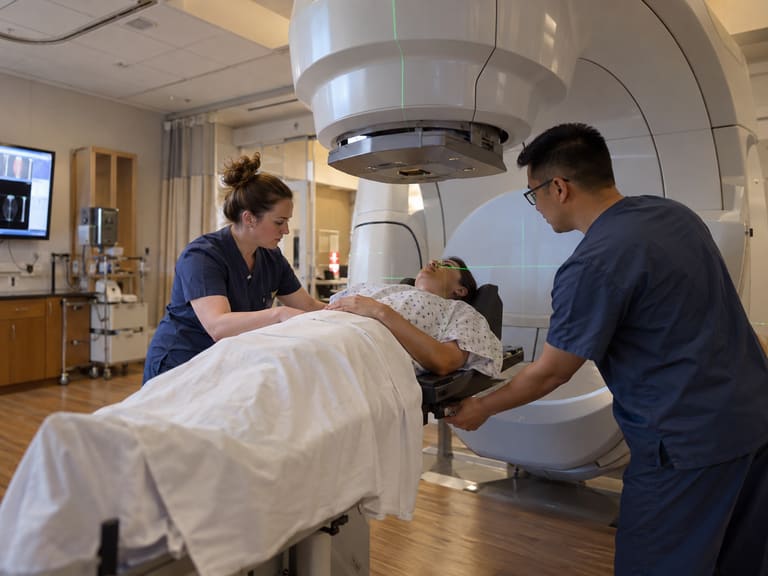
General information about radiotherapy and how a review with a radiation oncologist at a partner clinic is coordinated, from your records to planning scans.
View treatmentSend your records and your questions, and a coordinator will explain how a partner oncologist could review them. You are under no obligation, and your current care carries on as planned.
This is general information, not medical advice. Cancer care decisions must be made with your treating oncologist. In an emergency, contact your local emergency services. ELAVIA Global coordinates care; it does not provide medical treatment. All cancer care is delivered by independent partner clinics and their licensed oncologists.
ELAVIA Global coordinates international patient care. Clinical services are delivered by independently operated facilities.