
General information on how lung cancer is assessed and treated, and how a review with a thoracic oncology team at a partner clinic is coordinated.
Important
This is general information, not medical advice. Cancer care decisions must be made with your treating oncologist. In an emergency, contact your local emergency services.
ELAVIA Global coordinates care; it does not provide medical treatment. All cancer care is delivered by independent partner clinics and their licensed oncologists.
A second opinion is an additional view, not a replacement for your current care. Please do not stop, delay or change any treatment without speaking to your treating team.
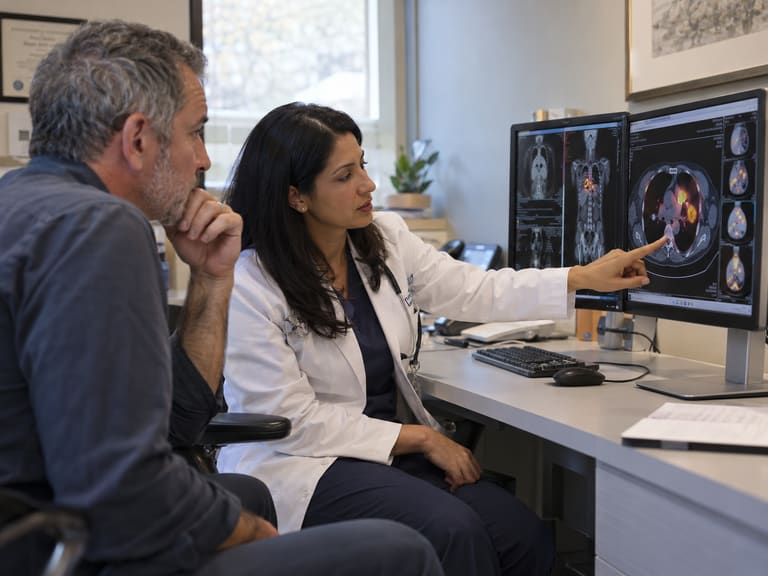
Lung cancer falls into two broad groups: non-small cell lung cancer, which is more common, and small cell lung cancer. Assessment normally includes a CT scan, frequently a PET-CT, a biopsy and, in non-small cell lung cancer, tests on the tumour (EGFR, ALK or PD-L1, for example) that can affect which treatments apply.
Depending on the type, stage and test results, a plan may involve surgery, radiotherapy (including stereotactic radiotherapy for some small tumours), chemotherapy, immunotherapy or targeted therapy, alone or together. Plans are generally agreed by a multidisciplinary thoracic tumour board.
How well the lungs work and your overall fitness count too, particularly if surgery is being considered. The treating team takes every decision after a full review.
You get in touch with a coordinator and explain what you would like looked at. We are clear about our role: ELAVIA Global coordinates care and does not give medical advice or treatment.
With your permission, your reports, scans and pathology go securely to an oncologist at an independent partner clinic. The original scan files or pathology slides may need a fresh look, or some tests may need repeating.
A thoracic oncology team reviews the scans, pathology and test results and outlines the approach it would recommend. More tests, such as further molecular testing or a brain scan, may be needed first.
If you decide to have part of your care at a partner clinic, its thoracic surgery and oncology teams provide it, and the coordinator handles the practical arrangements around each step.
You take written reports home with you. Follow-up normally continues with your own oncologist, and the coordinator helps pass records between the teams.
These are only general examples. A treating oncologist decides whether any test or treatment is right for you, after an examination and a review of your scans and pathology.
Keep the originals and send copies. The team carrying out the review may request more records or ask for some tests to be done again.
In non-small cell lung cancer, some tumours carry particular changes that certain targeted medicines work on, and PD-L1 levels can guide the use of immunotherapy. The oncologist decides which tests you need.
Many people can, but breathing difficulty, low oxygen levels or recent lung surgery may mean special arrangements or waiting. Check with your doctor before booking, and let the coordinator know if you need oxygen.
Most lung nodules are not cancer. A specialist decides whether a nodule needs watching, more scans or a biopsy, based on its size, its appearance and your risk factors.
Cancer care is planned and priced individually after the oncologist reviews your records.
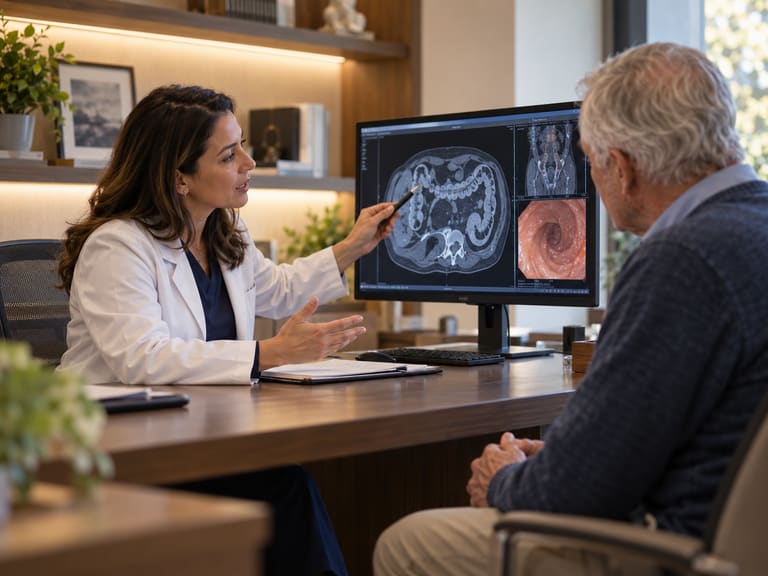
General information on how bowel (colorectal) cancer is assessed and treated, and how a review with a colorectal oncology team at a partner clinic is coordinated.
View treatment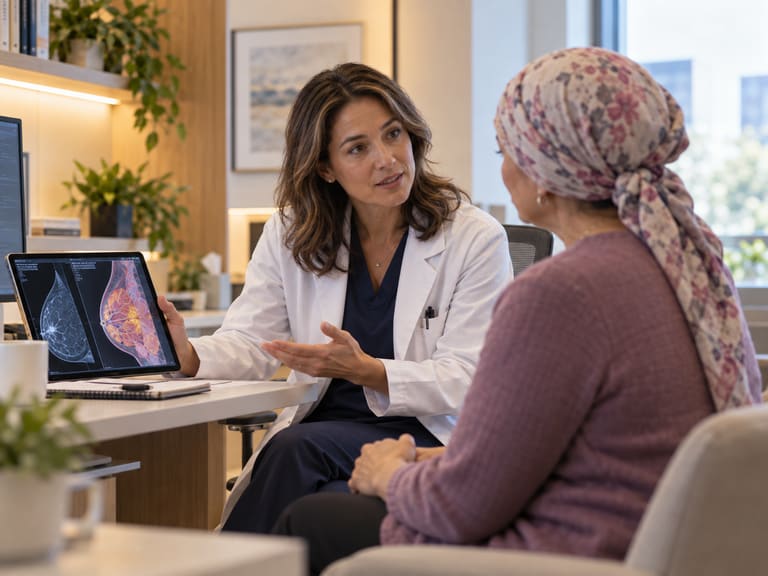
General information on PET-CT, biopsy and staging tests, and how diagnostic appointments at a partner clinic are coordinated, with results shared with your treating doctors.
View treatment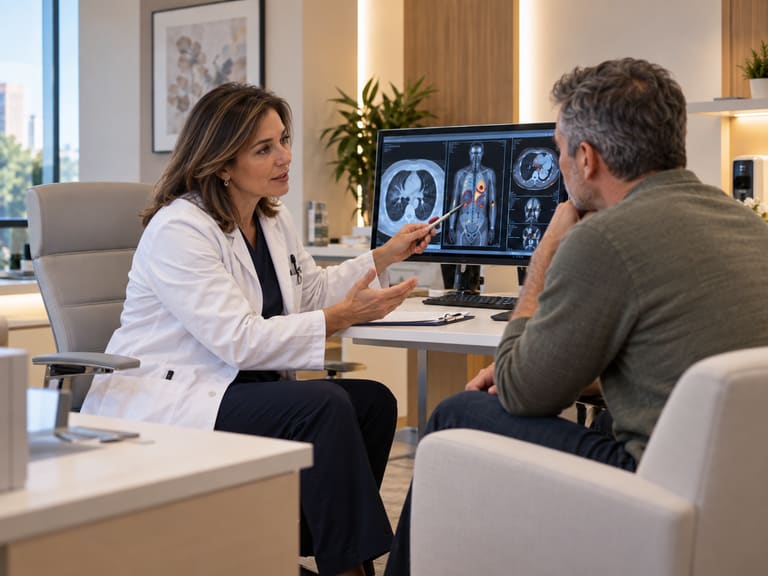
An additional expert review of an existing cancer diagnosis or treatment plan by an oncologist at a partner clinic — alongside, not instead of, your current care.
View treatmentSend your records and your questions, and a coordinator will explain how a partner oncologist could review them. You are under no obligation, and your current care carries on as planned.
This is general information, not medical advice. Cancer care decisions must be made with your treating oncologist. In an emergency, contact your local emergency services. ELAVIA Global coordinates care; it does not provide medical treatment. All cancer care is delivered by independent partner clinics and their licensed oncologists.
ELAVIA Global coordinates international patient care. Clinical services are delivered by independently operated facilities.